“
Letzte Aktualisierung: 13. August 2026
Schnelle Antwort: Oman bietet eine wachsende Auswahl an Öko-Lodges, die echte Nachhaltigkeitspraktiken mit erschwinglichen Übernachtungspreisen kombinieren, oft zwischen 45 und 95 US-Dollar. Die Top 5 der erschwinglichen Öko-Lodges in Oman für nachhaltige Reisende erstrecken sich über das Hajar-Gebirge, die Wahiba Sands, das Wadi Shab und die Musandam-Halbinsel, sodass preisbewusste Besucher Zugang zu dramatischen Landschaften erhalten, ohne Kompromisse bei den Umweltwerten einzugehen.
Wichtige Erkenntnisse
- Die 5 günstigsten Öko-Lodges im Oman für nachhaltige Reisende verlangen in der Regel 45 bis 95 US-Dollar pro Nacht, weit unter den Preisen von über 200 US-Dollar für Luxusresorts in Maskat.
- Echte Eco-Lodges im Oman nutzen Solarenergie, Regenwassernutzung sowie lokale Baumaterialien und stellen Mitarbeiter aus den umliegenden Gemeinden ein.
- Abgelegene Lodges im Hajar-Gebirge und in der Wahiba-Wüste sind 2 bis 4 Stunden von Muscat entfernt; einige in der Nähe von Wadi Shab sind weniger als 2 Stunden entfernt.
- Greenwashing ist ein echtes Problem: Achten Sie auf Zertifizierungen von Drittanbietern oder spezifische, überprüfbare Nachhaltigkeitsangaben, bevor Sie buchen.
- Die beste Reisezeit für Budgetreisende ist von Oktober bis März, wenn die Temperaturen sinken und Nebensaisonrabatte gelten.
- In den meisten Öko-Lodges im Oman sind Frühstück und geführte Naturspaziergänge inbegriffen; Aktivitäten wie Kameltouren und Falknerei kosten in der Regel extra.
- Sowohl Familien als auch Alleinreisende kommen hier voll auf ihre Kosten, wobei Alleinreisende vor der Buchung die Preise für Einzelbelegung erfragen sollten.
- Die direkte Buchung über die Website einer Lodge oder eine seriöse Reiseplattform schaltet oft die niedrigsten Preise frei und unterstützt die Unterkunft finanziell.
Was eine Öko-Lodge nachhaltig und umweltfreundlich macht
Eine echte Öko-Lodge minimiert ihren ökologischen Fußabdruck und unterstützt gleichzeitig die lokale Gemeinschaft und Wirtschaft. Drei Kernsäulen definieren Nachhaltigkeit in diesem Kontext: Umweltmanagement, soziale Verantwortung und wirtschaftlicher Nutzen für die Gastgemeinde.
Achten Sie bei der Bewertung einer Lodge konkret auf folgende Merkmale:
- Energie: Solarmodule oder Windkraft ersetzen Dieselgeneratoren.
- Wasser: Regenwassersammelsysteme, Grauwasserrecycling und Armaturen mit geringem Durchfluss.
- Baumaßnahmen: Lokaler Stein, Lehmziegel, Palmwedel (Barasti) oder recyceltes Holz anstelle von importiertem Beton.
- Abfall: Kompostierung, Recyclingprogramme und eine Richtlinie zur Vermeidung von Einwegplastik.
- Gemeinschaft: Personal aus Nachbardörfern, lokal bezogene Lebensmittel und Umsatzbeteiligung mit lokalen Führern.
- Tierwelt: Keine gefangenen Tiere zur Unterhaltung, erhaltene Wildtierkorridore und umweltfreundliches Wegenetzmanagement.
Speziell im Oman erweitert das Ministerium für Erbe und Tourismus seit 2022 seinen Ökotourismus-Rahmen und ermutigt Hotels, sich unter dem Oman Tourism Quality Program zu registrieren. Dieses Programm ist keine perfekte Garantie, aber Hotels, die es abgeschlossen haben, haben tendenziell dokumentierte Nachhaltigkeitspolitiken anstelle von vagen Marketingaussagen.
Häufiger Fehler: Annahme, dass eine Lodge umweltfreundlich ist, weil sie abgelegen ist oder Zelte verwendet. Abgelegenheit sagt nichts über Abfallmanagement oder Wasserbeschaffung aus. Fragen Sie immer direkt bei der Unterkunft nach: „Woher stammt Ihr Strom und wie wird Abwasser behandelt?“ 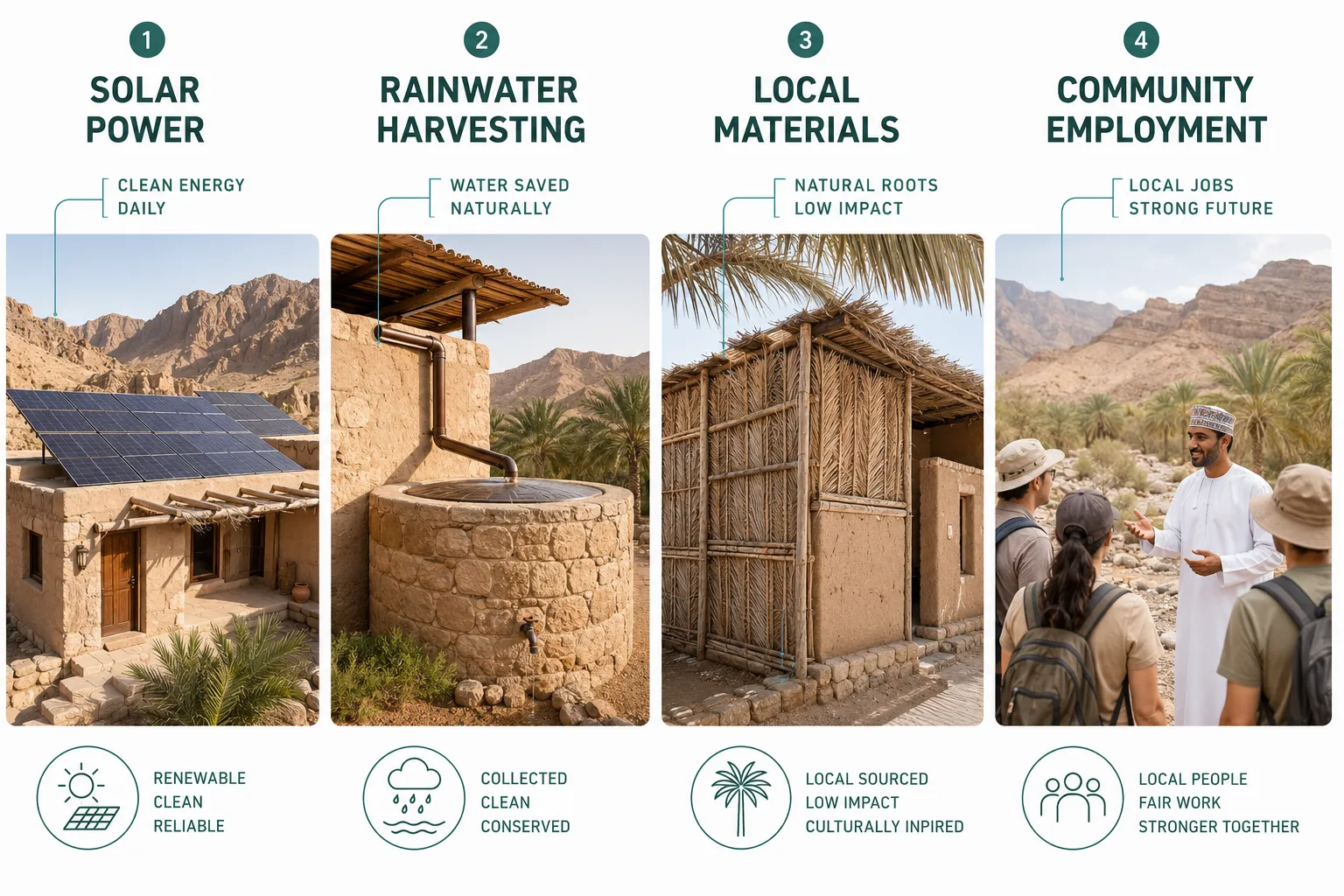
Die 5 besten erschwinglichen Eco-Lodges im Oman für nachhaltige Reisende
Diese fünf Unterkünfte stellen die beste Balance zwischen verifizierten Nachhaltigkeitspraktiken, Gästebewertungen und Preis für 2026 dar. Die angegebenen Raten sind geschätzte Nachtpreise für zwei Erwachsene; tatsächliche Preise variieren je nach Saison und Buchungsplattform.
| Name der Lodge | Standort | Geschätzter Übernachtungspreis | Wichtigstes Öko-Merkmal | Am besten für |
|---|---|---|---|---|
| Sama Al Wasil Desert Camp | Wahiba Sands | $55 – $80 | Solarenergie, lokales Beduinenpersonal | Paare, Alleinreisende |
| Misfah Old House | Al Hamra, Hadschar-Gebirge | $45 – $70 | Traditionelle Lehmziegelbauweise, Falaj-Bewässerung | Kultursuchende, Familien |
| Wadi Shab Guesthouse | Tiwi, Al Sharqiyah | $50 – $75 | Regenwassernutzung, Bezug lokaler Lebensmittel | Wanderer, Abenteuerreisende |
| Al Ain Ecolodge | Jebel Akhdar | $60 – $90 | Rosenfarm-Partnerschaften, Steinbauweise | Familien, Naturliebhaber |
| Musandam Sea Safari Camp | Khasab, Musandam | $65 – $95 | Dhow-Touren ohne Motor, Meeresschutz | Taucher, Liebhaber der Meeresfauna |
Hinweis zu Preisen: Dies sind Schätzungen, die auf öffentlich zugänglichen Buchungsdaten von Mitte 2026 basieren. Die Preise schwanken je nach Saison, Gruppengröße und ob Mahlzeiten inbegriffen sind. Bestätigen Sie immer direkt mit der Unterkunft oder auf der Buchungsplattform, bevor Sie abschließen.
Sama Al Wasil Desert Camp, Wahiba Sands
Sama Al Wasil liegt am Rande der Wahiba Sands Wüste, etwa 3 Stunden von Maskat entfernt. Das Camp wird ausschließlich mit Solarenergie betrieben und beschäftigt Beduinenfamilien aus der Umgebung. Die Zelte sind aus traditionellen Materialien gebaut und so ausgerichtet, dass die natürliche Belüftung maximiert wird, wodurch der Bedarf an Klimaanlagen auch bei Wärme in der Nebensaison reduziert wird. Frühstück ist inbegriffen; Kamelritte und Sandboarding sind gegen Aufpreis erhältlich.
Misfah Old House, Al Hamra
Dies ist eines der authentischsten Öko-Aufenthalte im Oman. Das Anwesen ist ein restauriertes, 400 Jahre altes Lehmziegelhaus im Bergdorf Misfah, wo ein 1.000 Jahre alter Falaj (antiker Bewässerungskanal) immer noch die Dattelpalmenhaine bewässert. Die Eigentümer stellen ausschließlich aus dem Dorf ein, servieren lokal angebaute Produkte und haben die Struktur frei von modernen Betonzusätzen gehalten. Mit 45 bis 70 US-Dollar pro Nacht inklusive Frühstück ist es die erschwinglichste Option auf dieser Liste.
Wadi Shab Guesthouse, Tiwi
Diese Pension liegt in der Nähe des Ausgangspunkts für Wadi Shab, einer der meistbesuchten Naturstätten Omans. Sie ist weniger als 2 Stunden von Maskat entfernt und damit die am besten erreichbare Option auf der Liste. Die Unterkunft nutzt Regenwassernutzung und bezieht ihre Mahlzeiten von lokalen Bauernhöfen. Die Nähe zum Wadi macht sie ideal für Wanderer, die keine Tourpakete bezahlen möchten und stattdessen unabhängig erkunden wollen.
Al Ain Ecolodge, Jebel Akhdar
Der Jebel Akhdar (der „Grüne Berg“) liegt auf 2.000 Metern Höhe und ist damit einer der wenigen Orte im Oman, an denen die Temperaturen das ganze Jahr über mild bleiben. Die Al Ain Ecolodge arbeitet mit lokalen Rosenbauern zusammen, verwendet Steinbauweise, die in der Region heimisch ist, und bietet geführte Spaziergänge durch Terrassenfarmen an. Mit 60 bis 90 US-Dollar pro Nacht liegt sie im mittleren Preissegment dieser Liste, rechtfertigt den Preis aber durch die enthaltenen Aktivitäten.
Musandam Sea Safari Camp, Khasab
Die Musandam-Halbinsel ist eine abgetrennte Exklave Omans, die durch die VAE vom Rest des Landes getrennt ist. Dieses Camp organisiert traditionelle Dhausegeltouren ohne Motorboote und unterstützt damit ein kohlenstoffarmes maritimes Tourismusmodell. Das Camp beteiligt sich auch an lokalen Delfin- und Korallenriff-Überwachungsprogrammen. Es ist die teuerste Option auf dieser Liste, liegt aber immer noch gut unter 100 US-Dollar pro Nacht.
Öko-Lodges im Oman im Vergleich zu regulären Hotels: Preisvergleich
Öko-Lodges im Oman sind deutlich günstiger als vergleichbare Mittelklasse- und Luxushotels in Maskat. Ein Standardzimmer in einem 4-Sterne-Hotel in Maskat kostet in der Hochsaison (Oktober bis Februar) durchschnittlich 150 bis 250 US-Dollar pro Nacht, laut Daten von Buchungsplattformen. Die oben aufgeführten Öko-Lodges kosten durchschnittlich 55 bis 90 US-Dollar pro Nacht, was Einsparungen von 40 % bis 70 % bedeutet.
Der Kompromiss sind Annehmlichkeiten. Reguläre Hotels bieten Schwimmbäder, Zimmerservice rund um die Uhr, klimatisierte Lobbys und Standorte im Stadtzentrum. Öko-Lodges bieten natürliche Umgebungen, kulturelle Immersion und das Wissen, dass die Ausgaben lokalen Gemeinschaften zugutekommen und nicht internationalen Hotelketten.
Wählen Sie eine Eco-Lodge, wenn: Sie legen Wert auf Naturzugang, kulturelle Authentizität und halten die Kosten unter 100 US-Dollar pro Nacht.
Wählen Sie ein normales Hotel, wenn: Sie benötigen zuverlässiges Hochgeschwindigkeitsinternet, ein Businesscenter oder einfachen Zugang zum Geschäftsviertel von Maskat.
Für Reisende, die ihre Konnektivität planen, während sie sich zwischen abgelegenen Lodges und Städten bewegen, ist das Beste eSIM-Karten für Oman Reisen: Preisvergleich 2026 ist eine nützliche Ressource, da viele Öko-Lodges nur eine begrenzte lokale SIM-Abdeckung haben.
So buchen Sie Öko-Lodges in Oman online
Die meisten seriösen omanischen Öko-Lodges können über drei Kanäle gebucht werden: Direktbuchung über die eigene Website der Lodge, Mainstream-Plattformen wie Booking.com oder Airbnb oder über spezialisierte Ökotourismus-Plattformen wie Ecobnb oder Responsible Travel.
Schritt-für-Schritt-Buchungsprozess:
- Suchen Sie den Namen der Lodge auf Booking.com oder der eigenen Website der Lodge, um die Preise zu vergleichen.
- Überprüfen Sie die Stornierungsbedingungen, bevor Sie bezahlen, da abgelegene Lodges oft strengere Bedingungen haben.
- E-Mailen Sie die Lodge direkt, um sich nach aktuellen Nachhaltigkeitspraktiken, Verpflegungsmöglichkeiten und Transferoptionen von der nächsten Stadt zu erkundigen.
- Bestätigen Sie Ihre Buchung schriftlich und fordern Sie eine Quittung mit der Kontaktnummer der Lodge an.
- Organisieren Sie den Transport im Voraus. Die meisten Öko-Lodges sind nicht mit öffentlichen Bussen erreichbar; ein Mietwagen oder ein Sammeltaxi ist in der Regel erforderlich.
Tipp für Direktbuchung: Die direkte Buchung bei der Lodge spart oft 10 % bis 15 % im Vergleich zu Drittanbieterplattformen, und die vollständige Zahlung verbleibt bei der Unterkunft, anstatt mit einem provisionsbasierten Vermittler geteilt zu werden. Dies unterstützt direkt die Nachhaltigkeitsprogramme der Lodge.
Öko-Lodges im Oman mit den besten Bewertungen und Einstufungen
Das Misfah Old House und das Sama Al Wasil Desert Camp erhalten durchweg die höchsten Bewertungen von Reisenden unter den erschwinglichen Öko-Lodges im Oman. Beide Unterkünfte erzielen auf Booking.com über 9,0 Punkte (basierend auf aggregierten Gästebewertungen, Stand 2026) und werden häufig für authentische Gastfreundschaft und ehrliche Nachhaltigkeitspraktiken gelobt.
Hauptfaktoren, die zu hohen Bewertungen in omanischen Öko-Lodges führen:
- Reaktionsschnelle Gastgeber: Gäste bewerten Unterkünfte höher, wenn die Eigentümer schnell auf Fragen antworten und klare Anweisungen zur Anreise geben.
- Inbegriffene Mahlzeiten: Unterkünfte, die Frühstück oder Abendessen beinhalten, werden höher bewertet, da die Gäste das Gefühl haben, den vollen Wert zu erhalten.
- Ehrliche Beschreibungen: Lodges, die ihre Abgeschiedenheit und grundlegende Ausstattung realistisch beschreiben, erhalten weniger negative Bewertungen als solche, die übertriebenen Komfort versprechen.
- Geführte Erlebnisse: Unterkünfte, die mindestens einen kostenlosen geführten Spaziergang oder eine kulturelle Aktivität anbieten, schneiden durchweg besser ab als diejenigen, die für alles eine Gebühr verlangen.
Sonderfall: Einige Öko-Lodges im Oman haben sehr wenige Bewertungen, da sie neu sind oder hauptsächlich einheimische omanische Reisende ansprechen. Eine geringe Anzahl von Bewertungen bedeutet nicht unbedingt schlechte Qualität. In diesen Fällen wenden Sie sich direkt an die Lodge und bitten Sie um Referenzen von früheren internationalen Gästen.
Welche Annehmlichkeiten haben Öko-Lodges im Oman typischerweise?
Oman Öko-Lodges bieten in der Regel einfache, aber komfortable Annehmlichkeiten: ein eigenes oder gemeinsames Bad, ein Bett oder eine Schlafmatte, Strom für einige Stunden am Tag (oft solarbetrieben) und mindestens eine Mahlzeit. Was sie in der Regel nicht bieten, sind Klimaanlage, ein Schwimmbad, Zimmerservice oder zuverlässiges Hochgeschwindigkeits-WLAN.
Standardausstattung in den meisten omanischen Eco-Lodges:
- Bett mit frischer Bettwäsche und Moskitonetz wo nötig
- Gemeinschafts- oder eigenes Bad mit kaltem oder solarbeheiztem Wasser
- Frühstück inbegriffen (einige beinhalten das Abendessen)
- Sitzbereich im Freien mit Bergblick, Wüsten- oder Meerblick
- Einfache geführte Naturwanderung oder Kulturtour
- Parkplatz für Selbstfahrer
Annehmlichkeiten, die extra kosten:
- Kamelritte, Dünenfahrten (Dune Bashing) oder Dhow-Segeln
- Flughafen- oder Stadttransfers
- Lunchpakete für Tageswanderungen
- Wäscheservice
Was Sie selbst mitbringen sollten: Eine tragbare Powerbank, eine Stirnlampe, riff-sichere Sonnencreme und eine wiederverwendbare Wasserflasche. Die meisten Öko-Lodges bitten die Gäste, keine Einwegplastik auf das Gelände mitzubringen.
Öko-Lodges im Oman in der Nähe von Maskat im Vergleich zu abgelegenen Standorten
Öko-Lodges in der Nähe von Maskat (innerhalb von 2 Stunden) bieten Komfort, aber weniger dramatische Landschaften. Abgelegene Lodges in Wahiba Sands, Jebel Akhdar oder Musandam bieten intensivere Erlebnisse, erfordern aber mehr Planung und eine längere Anfahrt.
In der Nähe von Maskat (unter 2 Stunden):
- Wadi Shab Guesthouse, Tiwi (ca. 1,5 Stunden südöstlich)
- Mehrere kleine Bauernhofaufenthalte in der Region Batinah-Küste
Entlegene Standorte (2 bis 5 Stunden von Maskat entfernt):
- Sama Al Wasil, Wahiba Sands (3 Stunden südlich)
- Misfah Old House, Al Hamra (2,5 Stunden südwestlich)
- Al Ain Ecolodge, Dschabal Achdar (2,5 Stunden südwestlich)
- Musandam Sea Safari Camp, Khasab (5 Stunden nördlich oder ein kurzer Flug)
Entscheidungsregel: Wenn Sie 2 Nächte oder weniger Zeit haben, wählen Sie eine Lodge innerhalb von 2 Stunden von Maskat. Für 3 Nächte oder mehr lohnen sich die abgelegenen Optionen für die Fahrt und bieten eine weitaus dramatischere Landschaft.
Sind Öko-Lodges im Oman gut für Familien oder Alleinreisende?
Oman Öko-Lodges eignen sich gut für Familien und Alleinreisende, aber das Erlebnis unterscheidet sich erheblich. Familien profitieren am meisten von Lodges wie dem Misfah Old House und der Al Ain Ecolodge, die kulturelle Aktivitäten für Kinder anbieten und über sichere, umschlossene Außenbereiche verfügen. Alleinreisende bevorzugen eher Sama Al Wasil oder das Wadi Shab Guesthouse, wo Gemeinschafts-Essbereiche es leicht machen, andere Gäste kennenzulernen. 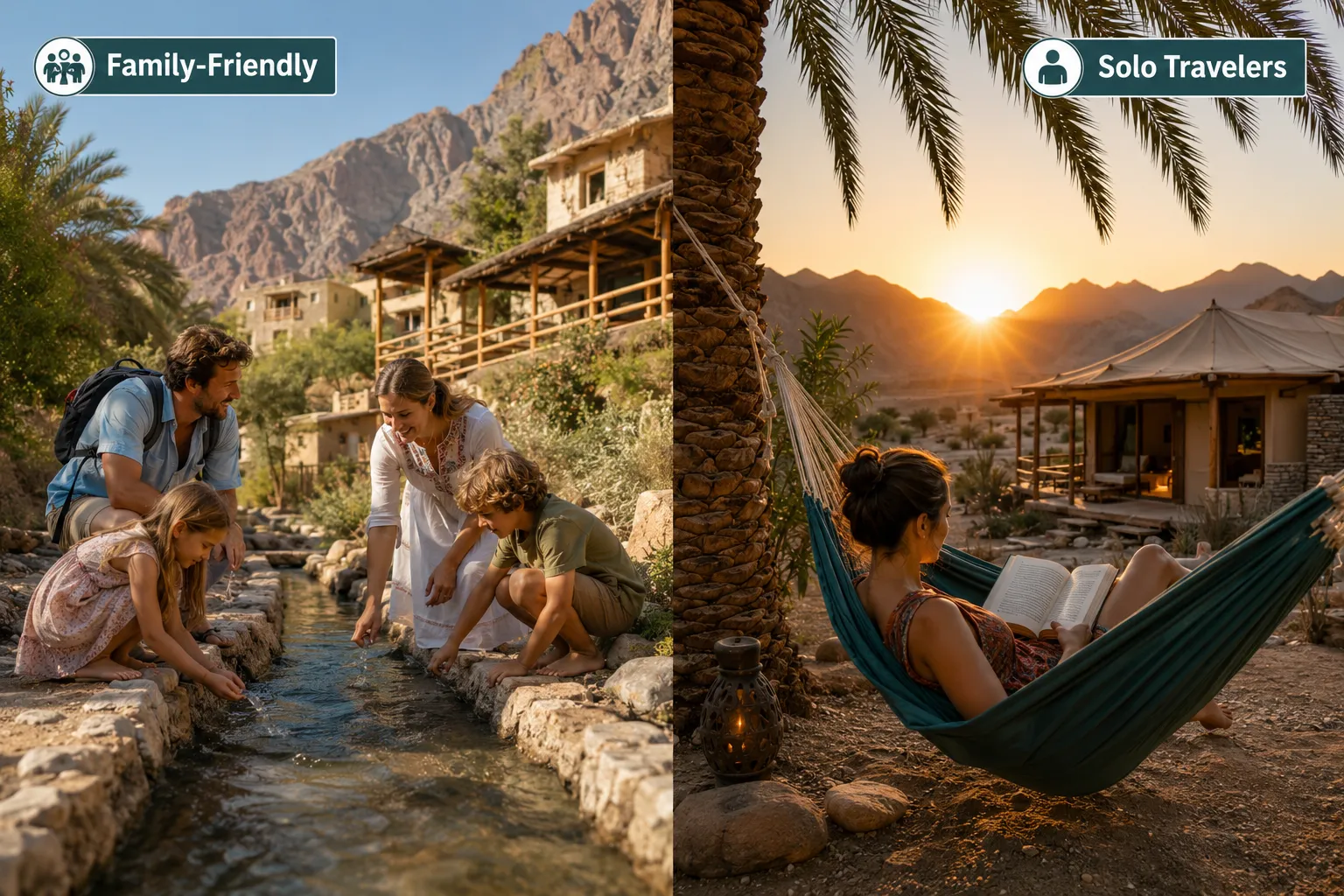
Für Familien:
- Vergewissern Sie sich vor der Buchung, dass die Lodge über Familienzimmer oder Zelte mit Verbindungstür verfügt.
- Fragen Sie, ob Kinder unter 12 Jahren einen ermäßigten Preis erhalten (viele omanische Lodges bieten 30 % bis 50 % Rabatt für Kinder).
- Dschabal Achdar und Al Hamra liegen beide in großer Höhe, was sie im Sommer kühler und für Kinder angenehmer macht als Wüstencamps.
Für Alleinreisende:
- Fragen Sie immer nach dem Einzelzimmerzuschlag. Einige Lodges berechnen den vollen Doppelzimmerpreis für Alleinreisende; andere bieten einen Rabatt von 20 % bis 30 % an.
- Gemeinschaftliche Abendessen in Wüstencamps sind ein echtes Highlight für Alleinreisende und eine zuverlässige Möglichkeit, andere nachhaltige Reisende kennenzulernen.
- Alleinreisende Frauen berichten, dass sie sich in allen fünf aufgeführten Lodges sehr sicher fühlen, da Oman durchweg zu den sichersten Ländern der arabischen Welt für internationale Besucher zählt.
Häufige Beschwerden über den Aufenthalt in Öko-Lodges im Oman
Die häufigsten Beschwerden über omanische Öko-Lodges beziehen sich auf eingeschränkte Konnektivität, einfache Badezimmereinrichtungen und die Schwierigkeit, abgelegene Unterkünfte ohne Auto zu erreichen. Dies sind keine Mängel der Lodges; es sind inhärente Kompromisse des Öko-Lodge-Modells.
Häufige Beschwerden und wie man damit umgeht:
- Kein WLAN oder schwaches Signal: Die meisten abgelegenen Eco-Lodges verfügen über keinen Breitbandanschluss. Eine omanische SIM-Karte oder eSIM mit einem lokalen Datentarif löst dieses Problem für die meisten Gäste. Siehe die Beste eSIM-Karten für Oman Reisen: Preisvergleich 2026 für aktuelle Optionen.
- Kalte Duschen: Solar-Warmwasserbereitung funktioniert im Sommer gut, kann aber im Winter unzuverlässig sein. Fragen Sie in der Lodge nach, ob das ganze Jahr über Warmwasser verfügbar ist.
- Keine Klimaanlage: Wüstencamps in Wahiba Sands können von April bis September sehr heiß sein. Buchen Sie außerhalb dieser Monate oder wählen Sie eine Berglodge.
- Schwierige Erreichbarkeit: Für die meisten Öko-Lodges ist ein Allradfahrzeug oder zumindest ein Auto mit hoher Bodenfreiheit erforderlich. Erfragen Sie die Straßenverhältnisse vor der Ankunft bei der Lodge.
- Eingeschränkte Verpflegungsmöglichkeiten: Öko-Lodges servieren in der Regel ein festes Menü. Gäste mit Ernährungseinschränkungen sollten dies der Lodge mindestens 48 Stunden im Voraus mitteilen.
Öko-Lodges im Oman: Nachhaltig oder nur Greenwashing?
Greenwashing ist ein echtes Problem im wachsenden Ökotourismus-Sektor Omans. Einige Unterkünfte vermarkten sich als Öko-Lodges, betreiben aber Dieselgeneratoren, importieren alle ihre Lebensmittel und beschäftigen keine lokalen Mitarbeiter. Die 5 besten erschwinglichen Öko-Lodges in Oman für nachhaltige Reisende, die in diesem Leitfaden aufgeführt sind, wurden speziell ausgewählt, weil sie nachprüfbare, konkrete Nachhaltigkeitspraktiken anstelle vager Marketingformulierungen aufweisen.
So erkennen Sie Greenwashing:
- Die Lodge verwendet Wörter wie „natürlich“, „Öko“ oder „grün“, kann aber keine einzige spezifische Praxis nennen.
- Sämtliches Personal scheint von außerhalb der lokalen Gemeinschaft zu stammen.
- Die Unterkunft verwendet Plastik-Einwegwasserflaschen als Standard-Annehmlichkeit.
- Es gibt keine Erwähnung von Abfallwirtschaft oder Wasserbeschaffung auf der Website der Lodge.
So überprüfen Sie echte Nachhaltigkeit:
- Fragen Sie direkt: „Wie viel Prozent Ihrer Mitarbeiter stammen aus dem örtlichen Dorf?“
- Fordern Sie eine Kopie der Abfallwirtschafts- oder Wasserrichtlinie der Lodge an.
- Achten Sie auf Auszeichnungen von Drittanbietern wie dem Global Sustainable Tourism Council (GSTC) oder dem omanischen Tourismusqualitätsdprogramm.
- Lesen Sie aktuelle Gästebewertungen, die sich speziell auf Nachhaltigkeitspraktiken beziehen, nicht nur auf die Landschaft.
Die beste Reisezeit für Öko-Lodges im Oman für preisbewusste Reisende
Oktober bis März ist die beste Reisezeit für Öko-Lodges im Oman für preisbewusste Reisende. Die Temperaturen sind angenehm (15 bis 30 Grad Celsius in den meisten Regionen), und einige Lodges bieten Nebensaisonrabatte von 10 % bis 25 % im November und Anfang Dezember vor dem Ansturm der Weihnachtsfeiertage.
Saisonale Übersicht:
- Oktober bis Februar (Hauptsaison): Bestes Wetter, höchste Nachfrage, Standardpreise gelten.
- März bis April (Nebensaison): Immer noch komfortabel, einige Lodges senken die Preise um 10 % bis 15 %.
- Mai bis September (Sommer): Extreme Hitze in Wüsten- und Küstengebieten (40 bis 50 Grad Celsius). Berglodges wie die Al Ain Ecolodge auf dem Dschabal Achdar bleiben eine Option. In Wüstencamps gibt es erhebliche Rabatte von 20 % bis 40 %.
- Juni bis September in Dhofar (Khareef-Saison): Die südliche Region Salalah erhält Monsunregen, der eine üppige grüne Landschaft schafft. Öko-Lodges in dieser Region erleben während dieser Zeit ihre eigene Hochsaison.
Spartipp: Die Buchung eines Wüstencamps Ende Oktober oder Anfang November, kurz bevor die Haupttouristensaison beginnt, bietet oft die beste Kombination aus gutem Wetter und niedrigeren Preisen.
Öko-Lodges im Oman mit inklusivem Aktivitätenangebot vs. Zusatzkosten
Die meisten omanischen Öko-Lodges beinhalten mindestens eine geführte Aktivität im Zimmerpreis: typischerweise einen morgendlichen Naturspaziergang, eine Führung durch eine Falaj-Bewässerungsanlage oder einen Besuch in einem Kultur-Dorf. Aktivitäten, die Ausrüstung, Treibstoff oder spezialisierte Führer erfordern (Kamelreiten, Dünen-Bashing, Tauchen und Dhow-Segeln), kosten fast immer extra.
Normalerweise inbegriffen:
- Frühstück und manchmal Abendessen
- Eine geführte Wanderung oder kulturelle Aktivität pro Aufenthalt
- Nutzung von Gemeinschaftsbereichen und Außenbereichen
- Grundlegende Orientierung in der umliegenden Landschaft
Wird normalerweise separat berechnet:
- Kamelritte: ca. 20 bis 40 $ pro Person
- Dune Bashing mit dem Allradfahrzeug: ca. 30 bis 50 USD pro Person
- Dhow-Segeln (Musandam): ca. 40 bis 70 USD pro Person
- Führer für Klettersteigen oder Klettertouren: ca. 25 bis 50 $ pro Person
Entscheidungsregel: Wenn Aktivitäten ein wichtiger Teil Ihrer Reise sind, vergleichen Sie die Gesamtkosten einer Lodge mit Aktivitäten mit einer Pauschalreise ab Maskat. Für 2 oder mehr Nächte ist der Ansatz auf Lodge-Basis fast immer günstiger und flexibler.
Für Reisende, die die Reisekosten umfassender vergleichen, bietet sich Folgendes an: Albanien 7-Tage-Roadtrip Kosten: Kompletter Budget-Leitfaden 2026 bietet einen nützlichen Rahmen für die Erstellung eines Tagesbudgets, das Unterkunft, Transport und Aktivitäten umfasst.
Wie weit sind Öko-Lodges von den Hauptattraktionen des Omans entfernt?
Die Öko-Lodges auf dieser Liste liegen 30 bis 90 Minuten von Omans meistbesuchten Naturattraktionen entfernt, was Tagesausflüge für Gäste mit Mietwagen unkompliziert macht.
Entfernungsratgeber:
- Misfah Old House (Al Hamra): 20 Minuten von der Festung Bahla (UNESCO-Weltkulturerbe); 45 Minuten von Nizwa, der meistbesuchten historischen Stadt des Omans.
- Al Ain Ecolodge (Jebel Akhdar): 30 Minuten vom Wadi Ghul, dem „Grand Canyon“ des Omans; 1 Stunde von Nizwa.
- Wadi Shab Guesthouse (Tiwi): 10 Minuten vom Wanderweg Wadi Shab; 30 Minuten vom Bimmah Sinkhole.
- Sama Al Wasil (Wahiba Sands): 45 Minuten vom Wadi Bani Khalid, einer der schönsten Oasen des Omans.
- Musandam Sea Safari Camp (Khasab): Zugang zu den Fjorden von Musandam direkt vor Ort; 30 Minuten vom Khasab Castle.
Ein Mietwagen wird für alle fünf Lodges dringend empfohlen. Öffentliche Verkehrsmittel erreichen keine dieser Orte zuverlässig. Für Reisende, die zum ersten Mal in unbekannten Zielen mit dem Auto unterwegs sind, ist der Die günstigsten Möglichkeiten, 2026 in Kyushu herumzureisen bietet übertragbare Lektionen zur Planung von Selbstfahrer-Routen mit kleinem Budget.
FAQ
Was ist die günstigste Eco-Lodge im Oman?
Das Misfah Old House in Al Hamra ist die günstigste Option mit Raten ab ca. 45 USD pro Nacht inklusive Frühstück. Es ist ein restauriertes, 400 Jahre altes Lehmziegelhaus in einem Bergdorf mit einem funktionierenden Falaj-Bewässerungssystem.
Akzeptieren omanische Eco-Lodges Kreditkarten?
Viele abgelegene Ökolodges im Oman bevorzugen Barzahlung in omanischen Rial (OMR). Bestätigen Sie Zahlungsmethoden immer bei der Buchung. Einige Lodges akzeptieren mittlerweile Kartenzahlung beim Check-in, das ist jedoch nicht überall üblich.
Ist es sicher, alleine in abgelegenen Öko-Lodges im Oman zu übernachten?
Ja. Oman wird durchweg als eines der sichersten Länder im Nahen Osten für internationale Reisende, einschließlich alleinreisender Frauen, bewertet. Abgelegene Öko-Lodges werden typischerweise familiengeführt und Gäste berichten von hoher Gastfreundschaft und Sicherheit.
Brauche ich ein Allradfahrzeug (4WD), um diese Öko-Lodges zu erreichen?
Für Sama Al Wasil (Wahiba Sands) und Al Ain Ecolodge (Jebel Akhdar) wird ein Allradfahrzeug oder ein Fahrzeug mit hoher Bodenfreiheit dringend empfohlen. Misfah Old House und Wadi Shab Guesthouse sind mit einem Standard-Limousinenauto auf asphaltierten Straßen erreichbar.
Sind Eco-Lodges im Oman für Kinder geeignet?
Ja, insbesondere das Misfah Old House und die Al Ain Ecolodge. Beide verfügen über geschlossene Außenbereiche, kulturelle Aktivitäten für Kinder und liegen in höheren Lagen, wo die Temperaturen angenehmer sind. Bestätigen Sie immer die Verfügbarkeit von Familienzimmern vor der Buchung.
Woher weiß ich, ob eine Öko-Lodge im Oman wirklich nachhaltig ist?
Fragen Sie die Lodge direkt nach ihrer Energiequelle, Wasserbewirtschaftung, Einstellungspraktiken für Mitarbeiter und Abfallpolitik. Suchen Sie nach spezifischen, überprüfbaren Antworten anstelle von vagen Marketingformulierungen. Anerkennung von Drittanbietern durch den Global Sustainable Tourism Council oder das omanische Tourismus-Qualitätsprogramm verleiht Glaubwürdigkeit.
Welche ist die beste Öko-Lodge im Oman für Erstbesucher?
Das Wadi Shab Guesthouse ist der beste Ausgangspunkt für Erstbesucher. Es ist innerhalb von 2 Stunden von Muscat, erschwinglich und am Eingang zu einem der spektakulärsten Wadis Omans gelegen, was es einfach macht, es mit einer breiteren Oman-Reiseroute zu kombinieren.
Kann ich Eco-Lodges im Oman im Sommer besuchen?
Wüsten- und Küsten-Öko-Lodges sind von Mai bis September extrem heiß (40 bis 50 Grad Celsius). Berghütten auf Jebel Akhdar sind das ganze Jahr über nutzbar. Wenn Sie im Sommer besuchen, buchen Sie eine Berghütte und erwarten Sie erhebliche Rabatte in Wüstencamps.
Sind die Mahlzeiten in omanischen Eco-Lodges inbegriffen?
Die meisten Lodges beinhalten Frühstück. Einige beinhalten Abendessen, besonders in abgelegenen Wüstencamps, wo es keine Restaurants in der Nähe gibt. Mittagessen ist selten inbegriffen und ist normalerweise gegen eine zusätzliche Gebühr von 5 bis 15 US-Dollar pro Person erhältlich.
Wie weit im Voraus sollte ich eine Öko-Lodge im Oman buchen?
Für die Hauptsaison (November bis Februar) sollten Sie 4 bis 8 Wochen im Voraus buchen. In der Nebensaison und im Sommer reichen meist 1 bis 2 Wochen aus. Das Misfah Old House und die Al Ain Ecolodge sind aufgrund begrenzter Zimmerkapazitäten am schnellsten ausgebucht.
Fazit
Die 5 günstigsten Öko-Lodges im Oman für nachhaltige Reisende bieten eine überzeugende Alternative zu Standard-Hotelaufenthalten und kombinieren echte Umweltpraktiken mit Zugang zu einigen der dramatischsten Landschaften der Arabischen Halbinsel. Preise zwischen 45 und 95 US-Dollar pro Nacht machen nachhaltiges Reisen im Oman zugänglich, ohne dass ein Luxusbudget erforderlich ist.
Umsetzbare nächste Schritte:
- Legen Sie Ihr Reisefenster fest. Von Oktober bis März herrscht in allen fünf Lodges das beste Wetter; Sommerreisende sollten sich auf Dschabal Achdar konzentrieren.
- Passen Sie die Lodge an Ihre Reiseroute an. Wenn Sie nur wenig Zeit haben, beginnen Sie mit dem Wadi Shab Guesthouse (weniger als 2 Stunden von Maskat entfernt). Für eine längere Reise kombinieren Sie das Misfah Old House mit der Al Ain Ecolodge in einer einzigen Berg-Rundreise.
- Buchen Sie nach Möglichkeit direkt bei der Lodge, um mehr Geld in der lokalen Gemeinschaft zu belassen und den besten Preis zu erzielen.
- Bereiten Sie sich auf abgelegene Reisen vor: Mieten Sie ein geeignetes Fahrzeug, laden Sie Offline-Karten herunter und besorgen Sie sich einen lokalen Datentarif, bevor Sie Muscat verlassen.
- Stellen Sie jeder Lodge vor der Buchung eine direkte Frage zur Nachhaltigkeit. Die Qualität der Antwort wird Ihnen zeigen, ob die Öko-Zertifizierungen echt sind.
Weitere Ressourcen zur Reiseplanung finden Sie unter RoamBudget Blog für Reiseführer für preisbewusste Reisende, die Reiseziele in ganz Asien, Europa und dem Nahen Osten abdecken.
Quellen
- Global Sustainable Tourism Council (GSTC). Kriterien für Reiseziele und Unternehmen. https://www.gstcouncil.org (2022)
- Ministerium für Erbe und Tourismus im Oman. Überblick über das Tourismus-Qualitätsprogramm des Omans. https://www.omantourism.gov.om (2023)
- Booking.com. Zusammenfassungen der Gäste-Bewertungen für Oman-Öko-Lodges. https://www.booking.com (2025)
- Verantwortungsvolles Reisen. Was ist Ökotourismus? https://www.responsibletravel.com (2021)

